When is a Suit Not a Suit? When it’s for Security – The Taikoo Brilliance
September 11th, 2026
When is a Suit Not a Suit? When it’s for Security – The Taikoo Brilliance
The recent decision of the Court of Appeal in Batavia Eximp & Contracting (S) Pte Ltd v Pedregal Maritime SA (the Taikoo Brilliance) [2026] EWCA Civ 1158 is a significant one, dealing with both the deck cargo exclusion under Article I (c) and the time bar under Article III Rule 6 of the Hague-Visby Rules.
The full text of the judgment can be found here.
Background
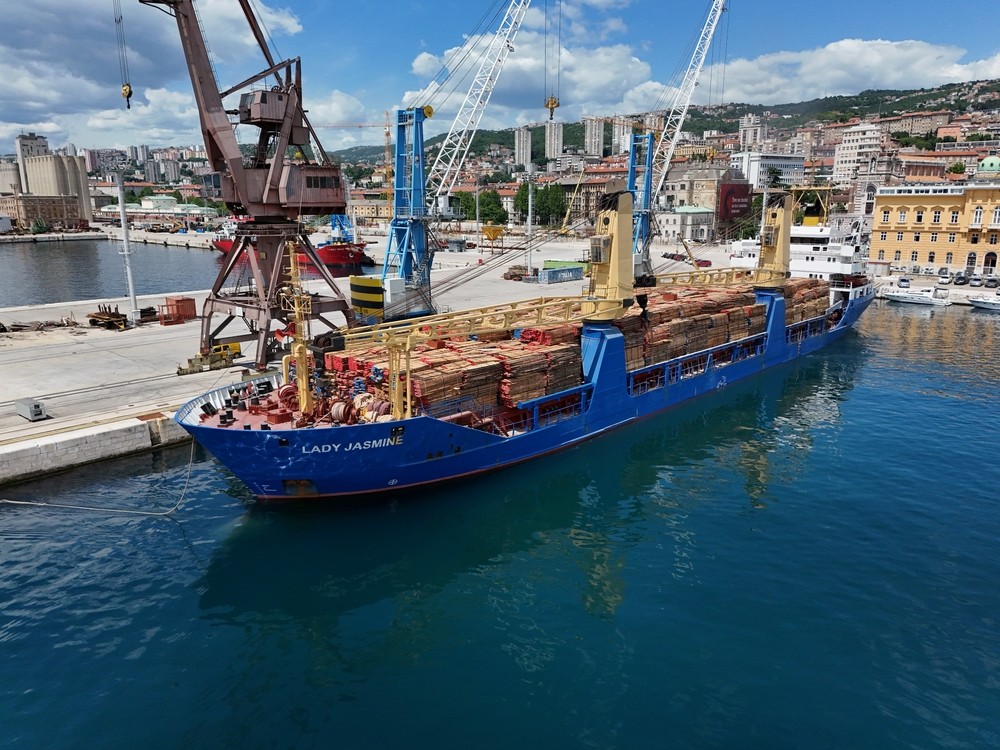
The case concerned the carriage of a cargo of timber from New Zealand to Kandla, India, aboard the TAIKOO BRILLIANCE (the “Vessel”). The Vessel’s owners were Pedregal Maritime SA (“Owners”) and Batavia Eximp & Contracting (S) Pte Ltd (the “Holders”) were the holders of four Bills of Lading issued by the Owners in respect of the cargo.
Two of the four Bills of Lading referred to some of the cargo being carried on deck. On arrival in Kandla, the Bills of Lading were unavailable, and discharge took place against a Letter of Indemnity provided by the Vessel’s charterers. The Holders alleged misdelivery and a dispute arose between them and Owners.
There was an arbitration clause in the Bills of Lading. However, neither party initially commenced arbitration. Instead, the Holders issued a writ in the High Court of Singapore for the arrest of a sister ship, the NAVIOS KOYO, in order to obtain security for the claim. Security was ultimately provided and she was released on 25 September 2020.
The Owners applied for a stay of the proceedings in favour of the arbitration clause. This was granted by the Singapore High Court on 20 December 2020 (and later confirmed by both the High Court and Court of Appeal).
It was not until 22 (or possibly 24) December 2020 that Holders commenced arbitration, more than a year after the delivery of the cargo. In arbitration, Owners argued that the claim was time-barred pursuant to Article III Rule 6 of the Hague-Visby Rules. The Tribunal agreed, but ruled that the time bar only applied in respect of cargo carried under deck. Both parties appealed under s. 69 of the Arbitration Act.
The High Court held that "suit" meant substantive proceedings capable of deciding the claim, and that the arbitrator was not wrong in law to regard the statement as to what was carried on deck as sufficient to engage the art. I(c) exception. The judge dismissed both the holders' and the shipowners' appeals. Again, both parties appealed that decision.
The questions for the Court of Appeal to determine were both on the requirements of the Hague-Visby Rules:
- Is an action for security, such as the proceedings commenced in Singapore, “suit” for the purposes of Article III Rule 6? (the Holders’ appeal).
- Where cargo covered by a Bill of Lading is carried partly on and partly under deck, what statement must there be on the face of the Bill to engage the exception in Article I (c)? (the Owners’ appeal).
Time Bar
The Holders accepted that proceedings in breach of an exclusive jurisdiction clause or an arbitration clause are not brought in a "competent" jurisdiction, and so cannot be "suit" for the purposes of Article III rule 6. For consideration of whether they were "suit", therefore, the proceedings in Singapore must be regarded as a claim for security only, in which the substantive issues of liability of the Owners to the Holders could not have been determined. The Court considered in some detail what was meant by a ‘suit’ for the purposes of the Hague-Visby Rules and came to the following conclusions:
- The French text of the Rules used the word "action" in all three relevant provisions, namely r. 6 art. III, r. 6 bis and art. 4 bis. It was common ground that "action" in r. 6 bis and art. 4 bis referred to claims to determine liability. Accordingly, the use of the same French word in r. 6 art. III strongly supported the shipowners' case that "suit" in the English text was concerned with the same type of claim.
- The fact that the term "suit" was not defined or qualified meant that the nature and subject-matter of the proceedings to which it referred had to be ascertained from the context in which it was used. The bringing of suit in time would prevent the carrier from being discharged of liability. Accordingly, the natural reading was that "suit" had to be seeking to establish such liability.
- The nature and operation of a time bar was well understood as requiring a claim to establish liability to be brought within a specified time, and there was no reason to read r. 6 art. III as operating differently.
- Moreover, the established limitation that, in order to be "suit", proceedings had to be "competent" plainly proceeded on the basis that the relevant competence was to establish liability between the holder of the bill of lading and the carrier for damage to goods.
- The one-year time bar was designed to ensure prompt pursuit of substantive claims, not merely notification of claims. The rule therefore gave the carrier certainty that it could clear its books if no substantive claim was brought within a year; it also ensured that claims were brought promptly, as those which were issued but struck out would cease to count as "suit".
- If the Holders' interpretation were correct, the rule, far from achieving finality, would give rise to extended or even completely open-ended claim periods. A claim purely for security would satisfy the sole time bar provision in the Hague-Visby Rules, leaving it open to the Holders to commence substantive proceedings at any time thereafter, without limit as far as the rules are concerned. The only restraint would be domestic limitation provisions in the jurisdiction where substantive proceedings were eventually brought. Accordingly, "suit" meant substantive proceedings capable of deciding the claim.
Accordingly, the Holders’ appeal was dismissed and the Court held that the claim was time-barred.
Deck Cargo Exclusion
Article I 1 2 In these Rules the following words are employed, with the meanings set out below:
(c) `Goods' includes goods, wares, merchandise, and articles of every kind whatsoever except live animals and cargo which by the contract of carriage is stated as being carried on deck and is so carried
The notice in writing need not be given if the state of the goods has, at the time of their receipt, been the subject of joint survey or inspection.
Subject to paragraph 6bis the carrier and the ship shall in any event be discharged from all liability whatsoever in respect of the goods, unless suit is brought within one year of their delivery or of the date when they should have been delivered. This period, may however, be extended if the parties so agree after the cause of action has arisen.
In the case of any actual or apprehended loss or damage the carrier and the receiver shall give all reasonable facilities to each other for inspecting and tallying the goods.
Again, the Court considered the purpose of the exclusion and the language used in order to answer the question, and concluded:
- Deck cargo, which was more at risk of damage than that carried below deck, was excluded from the scope of the Rules by virtue of art. I(c) so that the carrier's duties to exercise care did not apply. Where a consignment of goods was not homogeneous and some of the items were left on deck while others were carried below, the items on deck would have to be specifically identified in order to be "stated" as being on deck.
- As such division of the cargo resulted in the two parts being subject to different regimes - one incorporating the Rules and one not - the relevant items had to be ascertained and allocated to each category: a statement that merely indicated that some unidentified items were on deck was insufficient to "state" which items were carried on deck.
- The purpose of a statement identifying goods carried on deck was to give shippers and subsequent holders full knowledge of which specific items were carried on deck so they could manage their risks and arrange insurance accordingly. Where items of cargo varied in value, identification of on-deck items, such as by parcel or serial number, was essential for the art. I(c) exclusion to be engaged. The arbitrator and the judge had both erred in taking a different view. The question of what was required in a statement where cargo was homogeneous or did not differ in value between constituent elements was left open.
Accordingly, the Owners’ appeal was allowed.
Conclusion
Given the clear decisions made by the Court in this case, the following practical points arise for parties on either side of a cargo claim:
- Cargo interests must ensure they do not fall foul of the time bar, either by obtaining a time extension or by commencing substantive court/arbitration proceedings within the relevant period.
- Best practice remains to be as specific as possible when it comes to notation on Bills of Lading, but aggregate statements can still satisfy Article I (c), especially where the cargo is homogenous.

Are you on board?
Get in touch