War Risk Clauses
March 10th, 2026
War Risk Clauses
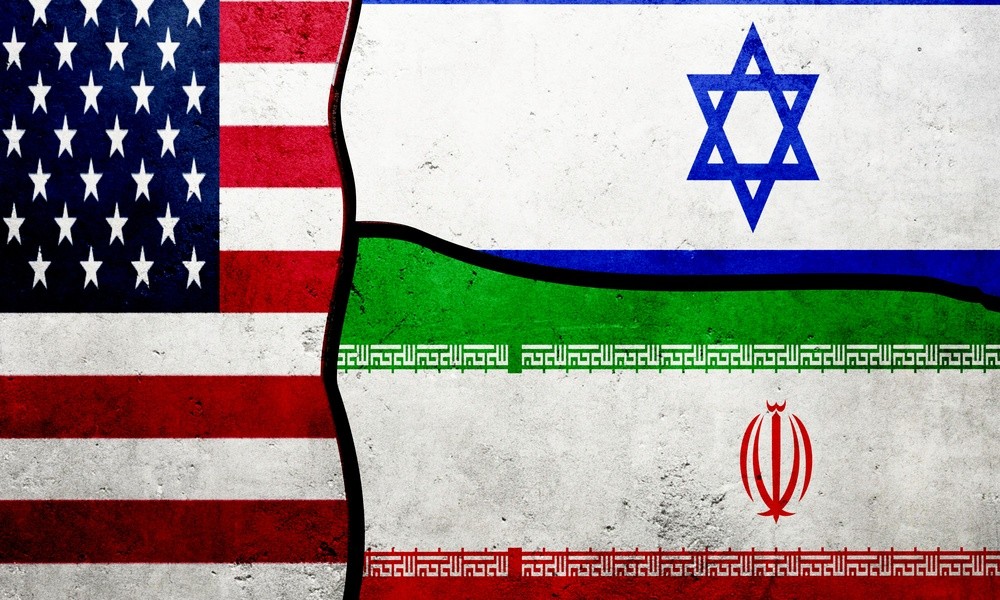
On the 28 February 2026 the US and Israel launched widespread missile strikes across Iran. Iran responded by launching attacks on Israel and US-allied states across the Gulf.
As of Friday 6 March 2026, the United Arab Emirates, Qatar, Kuwait, Bharain, Oman, Saudi Arabia, Jordan, Lebanon, Iraq, Cyprus, the United Kingdom, France, Azerbaijan, Sri Lanka, Beirut and Turkey have all become involved or been affected.[1]
As a result of the ongoing conflict, Iran has vowed to attack any ships passing through the Strait of Hormuz. As of the 2 March 2026 the Strait was purportedly closed with Iranian media reporting any ship passing through the Strait will be set ablaze.[2] Currently, it is estimated that 20% of all global oil and gas passes through the Strait of Hormuz.[3] Therefore, the conflict has caused much uncertainty and disruption to international trade.
A particular concern for both Owners and Charterers alike is what to do if a Vessel is on route or intended to sail to an area that is currently affected by the conflict. Questions arise regarding what contractual provisions are in place to prevent harm coming to the Vessel, crew, cargo or other persons on board.
This article will discuss common provisions found in charterparties that aim to deal with and mitigate such risks.
War Risk Clauses
Charterparty War Risk Clauses embrace a wide range of dangers including blockades, piracy, terrorism and actual or threatened war. Typically, they confer a right on an Owner not to proceed to a Charterer’s nominated port if, in their or the Master’s reasonable judgment, this may be or may become dangerous.[4] An Owner may also recover certain costs from the Charterer.[5]
Common War Risk Clauses found in Charterparties are the following standard BIMCO clauses:
- CONWARTIME; and
- VOYWAR (the “Clauses”).
The Clauses were previously revised in 2013 and most charterparties will now contain 2013 versions.
However, a recent review was undertaken by BIMCO to ensure the Clauses “remained in line with commercial needs”.[6] Following this review, the Clauses were updated and 2025 versions published.
BIMCO now recommends that the 2025 version of the Clauses are used within charterparties.
It is important to note that the Clauses and any War Risk Clause can be overridden by other provisions contained in a charterparty. For instance, in The Eleni P a separate piracy clause in the charterparty reduced the rights of the Owner under a CONWARTIME clause to refuse the Vessel’s employment.[7]
CONWARTIME
CONWARTIME is BIMCO’s standard War Risk Clause for time charters and permits a Vessel to decline to proceed to, or discontinue proceeding to, any nominated port where “it appears that the Vessel, cargo, crew or any other persons on board the Vessel, in the reasonable judgment of the Master and / or Owners, may be exposed to War Risks whether such risk existed at the time of entering into this Charterparty or occurred thereafter.”[8]
Therefore if, in the reasonable judgment of the Master and / or Owner, the Vessel may be exposed to one or more of the threats identified in CONWARTIME (war, acts of war, civil war, hostilities, etc.) and this threat may be dangerous / become dangerous to the Vessel, they can refuse to proceed.[9]
Reasonable judgment refers to the decision made by the Master and / or Owner rather that how the decision was made. As established in The Triton Lark a failure to make one or more reasonable enquiries will not invalidate a reasonable judgment which considers all relevant circumstances.[10]
CONWARTIME requires the Master and / or Owner to judge the Vessel’s exposure to danger and there must be a genuine appreciable danger.[11] However, there is no requirement to comment on the likelihood of this having an impact on the Vessel.
CONWARTIME also prevents any assumption by the Owner of risks already present when the charterparty was concluded. Therefore, an Owner does not need demonstrate a material increase in the level of risk or a substantial change to the risk since the charterparty was agreed.[12]
Moreover, if a nominated port later becomes dangerous or it appears that it may become dangerous, the Vessel may leave.[13]
Under CONWARTIME, if a Vessel enters an area affected by war risks and the Owner incurs any additional costs as a result these can be recovered from the Charterer. The Charterer must also reimburse any additional bonus or wages paid to the crew.[14]
However, if an Owner exercises their rights under CONWARTIME and declines to proceed to the Charterer’s nominated port they are required to give immediate notice to the Charterer.[15] If the Charterer fails to respond to this notice within 72 hours and nominate a substitute safe discharge port, the Owners may discharge at any safe port of their choosing. The Charterer is liable for all costs, risk and expense for this alternative discharge.
The Charterer must also indemnify the Owner for any claims arising under any Bills of Lading, Sea Waybills or other documents of carriage.[16]
VOYWAR
VOYWAR is BIMCO’s standard War Risk Clause for voyage charters. Like CONWARTIME, it is triggered when it appears that “the Vessel, cargo, crew or any other persons on board the Vessel, in the reasonable judgement of the Master and / or Owners, may be exposed to War Risks.”[17]
Unlike CONWARTIME, an Owner’s rights are split into before and after loading of the Vessel commences.
If it becomes apparent prior to loading that performing a charter may result in a Vessel being exposed to a defined war risk, an Owner may either give notice of cancellation or refuse to perform the charter.[18]
However, if the charterparty contemplates a range of ports, and a Vessel may be exposed to risk at one or more of the nominated ports, the Owner is first required to give notice to the Charterer.[19] If the Charterer does not respond to Owners within 72 hours nominating substitute safe port, they may then cancel the charter.
Once loading has commenced, much like under CONWARTIME, if it appears that performance of the charter with result in exposure to war risks an Owner is not obliged to continue.[20]
An Owner may choose to discharge cargo at an alternative safe port. But first they must give the Charterer notice and request they nominate an alternative safe port. If the charterers do not do this within 72 hours, then Owners can discharge at a safe port of their choosing.[21]
Additionally, if it appears that the Vessel may be exposed to war risks on any part of the route, an Owner may elect an alternative route for the Vessel.[22] An Owner must notify the Charterer of this alternative route and freight is adjusted to account for the deviation.
Like with CONWARTIME, Charterers are liable for any additional premiums or costs incurred by an Owner as a result of entering a dangerous area. If the final port of discharge is in a dangerous area, this liability continues until the completion of discharge and when the Vessel leaves.[23]
The Charterer must also indemnify the Owner for claims made under any Bills of Lading, Seaway Bills or other contracts of carriage made as a result of acting in accordance with VOYWAR.
Difference between CONWARTIME 2013 and 2025
The 2013 revision of CONWARTIME marked a significant change to the War Risk Clause. In particular, the following two changes were made:
- Following The Triton Lark the test for determining whether to proceed was amended to be based on whether the area the Vessel was proceeding to is dangerous. This removed the need to assess the degree of risk; and
- Following The Paiwan Wisdom[24], and to remove inconsistency with BIMCO’s Piracy Clause, CONWARTIME 2013 was amended to apply regardless of whether the relevant war risk existed at the time of entering the charter.[25]
Both changes were retained in 2025.
The changes made in 2025 largely focused on revising CONWARTIME 2013 to provide consistency and clarity. Various provisions were streamlined to make them clearer and CONWARTIME has additional definitions.
Additional provisions were added in 2025 for transparency regarding insurance costs.
Most notably, the time afforded to Charterers to nominate a substitute safe port was increased from 48 to 72 hours.
Difference between VOYWAR 2013 and 2025
Like CONWARTIME 2013, VOYWAR 2013 updated the test for determining the extent of risk. This has also been maintained in the 2025 revision.
However, in 2025 VOYWAR was amended to ensure it focuses on the position before, during and after loading or after the voyage has commenced.[26] Therefore “during and after” wording has been added.
Alongside other minor amendments to improve the text of VOYWAR and provide consistency, VOYWAR includes a new provision for recalculating freight. BIMCO considers the new calculation to be more in line with common industry practice. This also places a requirement on Owners to present documents.[27] It is thought that this is a more fair and reasonable way of determining freight should a Vessel be required to take an alternative route.
Additionally, like with CONWARTIME, the nomination period for alternative safe ports have increased from 48 to 72 hours.
Summary
In conclusion, most charterparties will contain a War Risk Clause. It is likely this will be either CONWARTIME or VOYWAR. Both of the Clauses permit an Owner to refuse to proceed to the Charterer’s nominated port if, in their reasonable judgement, this exposes the Vessel to danger.
Owners are required to notify the Charterers of this, and the Charterers may first nominate a substitute port.
The Charterer must indemnify the Owner for any subsequent claims under any contract for carriage and must also reimburse the Owner for any additional costs incurred.
The Clauses have both recently been updated by BIMCO. Most of the revisions focus on streamlining and clarifying provisions. However, there have been several notable changes such as increased notice periods and new freight calculations.
[1] H Boucher and Others, ‘Mapped: How Trump’s war on Iran has spread to 14 countries and plunged region into crisis’ (Independent, 6 March 2026) <Mapped: How Trump’s war on Iran has spread to 14 countries and plunged region into crisis | The Independent> accessed 8 March 2026.
[2] J Choukier and T Ramadan, ‘Iran vows to attack any ship trying to pass through Strait of Hormuz’ (Routers, 2 March 2026) <Iran vows to attack any ship trying to pass through Strait of Hormuz | Reuters> accessed 8 March 2026.
[3] Ibid.
[4] Julia Dias and Others, ‘Discharge of Contractual Obligations’ in Howard Bennett (ed) Carver on Charterparties (3rd edn, Street & Maxwell 2024), 4-452.
[5] Ibid.
[6] BIMCO, ‘War Risks Clause for Time Chartering 2025 (CONWARTIME 2025)’ (BIMCO) <War Risks Clause for Time Chartering 2025 (CONWARTIME 2025)> accessed 7 March 2026 and BIMCO, ‘War Risks Clause for Voyage Charter Parties 2025 (VOYWAR 2025)’ (BIMCO) <War Risks Clause for Voyage Charter Parties 2025 (VOYWAR 2025)> accessed 7 March 2026,
[7] Eleni Shipping Ltd v Transgrain Shipping BV [2019] EWHC 910 (Comm), [2019] 2 Lloyd’s Rep. 265, [25].
[8] BIMCO ‘War Risks for Time Chartering 2025 (CONWARTIME 2025), Sub-Clause (b).
[9] Dias and Others, ‘Discharge of Contractual Obligations’, Carver on Charterparties, 4-453.
[10]Pacific Basin IHX ltd v Bulkhandling Handymax AS (The Triton Lark) (No.1) [2011] EWHC 2862 (Comm); [2012] 1 Lloyd’s Rep. 151, [55].
[11] Dias and Others, ‘Discharge of Contractual Obligations’, Carver on Charterparties, 4-455.
[12] BIMCO ‘War Risks for Time Chartering 2025 (CONWARTIME 2025), Sub-Clause (b).
[13] Ibid., Sub-Clause (b) and (c).
[14] Ibid., Sub-Clause (e).
[15] Ibid., Sub-Clause (g).
[16] Ibid., Sub-Clause (h),
[17] Dias and Others, ‘Discharge of Contractual Obligations’, Carver on Charterparties, 4-460.
[18] BIMCO, ‘War Risks Clause for Voyage Charter Parties 2025 (VOYWAR 2025), Sub-Clause (b).
[19] Dias and Others, ‘Discharge of Contractual Obligations’, Carver on Charterparties, 4-462.
[20] BIMCO, ‘War Risks Clause for Voyage Charter Parties 2025 (VOYWAR 2025), Sub-Clause (c).
[21] Ibid., Sub-Clause (c).
[22] Ibid., Sub-Clause (c).
[23] Dias and Others, ‘Discharge of Contractual Obligations’, Carver on Charterparties, 4-464.
[24] Taokas Navigation SA v Komrowski Bulk Shipping KG (GmbH & Co) (The Paiwan Wisdom) [2012] 2 Lloyd’s Rep. 416,
[25] BIMCO ‘War Risks for Time Chartering 2025 (CONWARTIME 2025).
[26] BIMCO, ‘War Risks Clause for Voyage Charter Parties 2025 (VOYWAR 2025).
[27] Ibid.

Are you on board?
Get in touch