Case Update - MS Amlin Marine NV v King Trader Limited & Ors [2025] – Pay First Clauses
November 17th, 2025
Case Update - MS Amlin Marine NV v King Trader Limited & Ors [2025] EWCA Civ 1387 – Pay First Clauses
Introduction
The Court of Appeal recently upheld a decision of the Commercial Court in finding that a “pay first” clause within a marine insurance policy could be relied upon by a marine insurer to avoid liability to a third party, in circumstances where the insured was insolvent.
The Judgment brings welcomed clarity as to when a party will be able to rely on the “red hand ground” (now to be referred to as the “onerous clause doctrine”), as well as valuable commentary on the grounds of inconsistency and incorporation.
To clarify some key terms within this article:
- “Pay First Clause” – a pay first clause (also known as a “pay to be paid” clause) in the context of an insurance policy requires the insured to pay claims for which it is liable, before being able to recover the same from its insurer.
- The “2010 Act” – The Third Parties (Rights against Insurers) Act 2010 governs when a third party will be entitled to claim directly against liability insurers, particularly when the insured is insolvent.
- The “red hand ground” or “onerous clause doctrine” – the principle that a party will not be bound by a contractual term if that term is particularly onerous or unusual and was not fairly brought to the relevant party’s attention.
Background
On 28 March 2018, MS Amlin Marine NV (the “Insurer”) issued a marine insurance policy (the “Policy”) to Bintan Mining Corporation (the “Charterers”) in respect to Charterers’ liability.
King Trading Ltd (“Owners”), who were insured by the Korea Shipowners’ Mutual Protection & Indemnity Association (the “Club”) time-chartered the Solomon Trader (the “Vessel”) to the Insured by a time charterparty dated 29 May 2017.
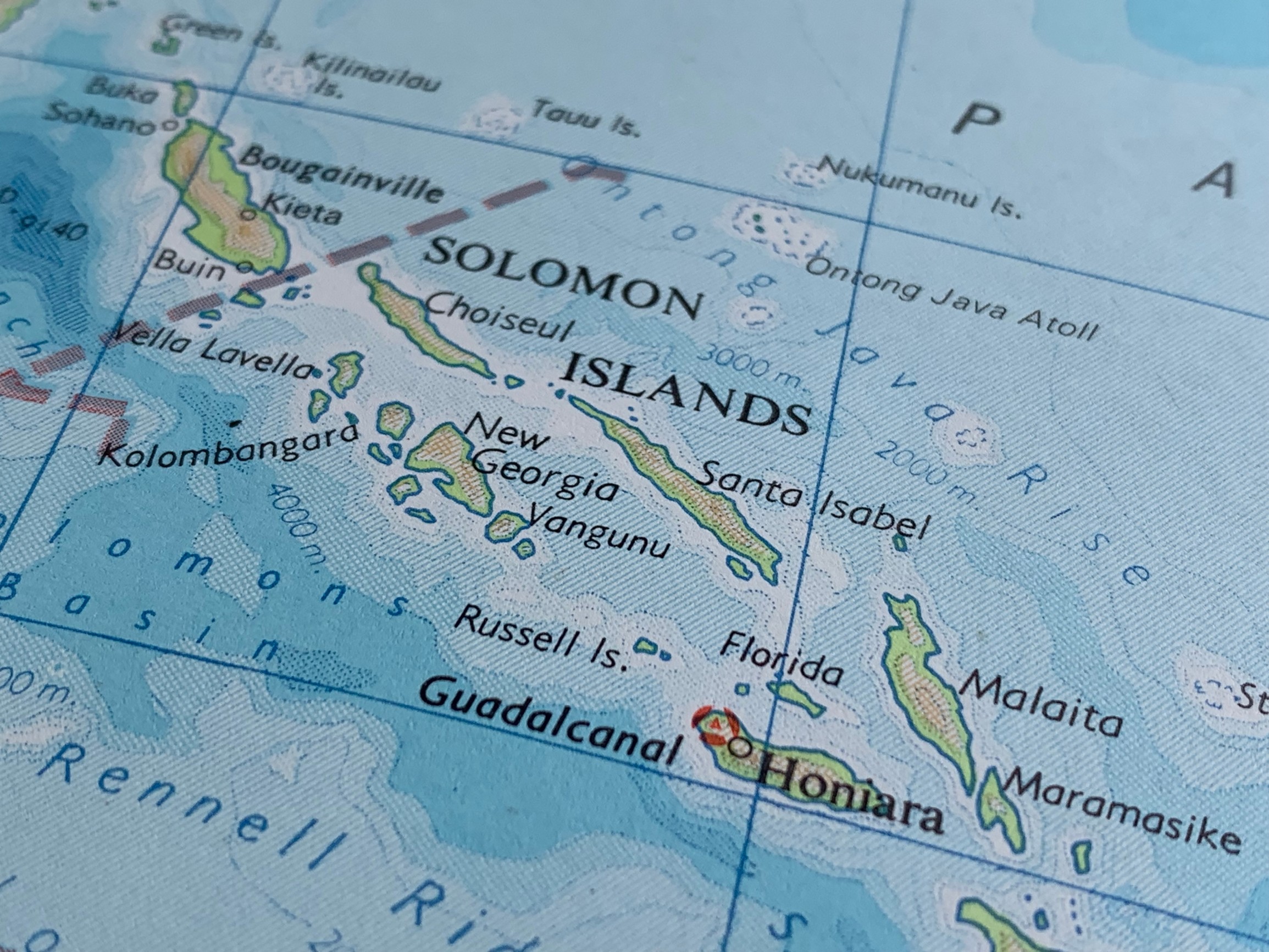
In February 2019, the Vessel grounded in the Solomon Islands. Owners and the Club subsequently obtained an award on 14 March 2023 against Charterers in LMAA arbitrations in Hong Kong (the “Award”).
Charterers are in insolvent liquidation, such that Owners and the Club’s best prospect of recovering the sums due under the Award would be to pursue the Insurers directly, with reference to the 2010 Act.
With this in mind, the Insurer commenced London proceedings to seek declarations to the effect that the pay first clause within the Policy prevented the Insurer from being required to indemnify Charterers against its liability under the Award, to Owners and the Club.
The Commercial Court found in favour of the Insurer. The Owners and the Club appealed on three grounds:
- The Inconsistency Ground – it was argued that the Pay First Clause was inconsistent with superior terms in the Policy;
- The Red Hand Ground – it was alleged that the Pay First Clause falls foul of the red hand doctrine;
- The Incorporation Ground – it was argued that the Pay First Clause was not incorporated into the Policy.
The Court of Appeal’s Findings
The Inconsistency Ground
The Pay First Clause was contained within the claims section of the General Terms and Conditions of the Policy. The wording of the Pay First Clause was as follows:
“It is a condition precedent to the Assured’s right of recovery under this policy with regard to any claim by the Assured in respect of any loss, expense or liability, that the Assured shall first have discharged any loss, expense or liability.”
Owners and the Club argued that the Pay First Clause was inconsistent with a clause contained within the Certificate of Insurance which provided that the Insurer shall indemnify Charterers against legal liabilities, including arbitral awards (the “Insuring Clause”).
A hierarchy clause within the Policy confirmed that in the event of a conflict between clauses, terms within the Certificate of Insurance would prevail over the General Terms and Conditions.
In considering the Inconsistency Ground, the Court of Appeal referred to four key cases (Glynn v. Margetson [1893] AC 351 (Glynn), Pagnan SpA v. Tradax Ocean Transportation SA [1987] 2 Lloyd’s Rep 342 (Pagnan), Alexander v. West Bromwich Mortgage Co [2016] EWCA Civ 496 (Alexander), and Septo Trading Inc v. Tintrade Ltd (The Nounou) [2021] EWCA Civ 718 (The Nounou)).
The Court of Appeal held that there was no inconsistency in this case. In reaching this conclusion, the Court referenced the “single clause” test set out by Hamblen LJ in Alexander:
“one way of testing whether clauses can be ‘fairly’ or ‘sensibly’ read together is by seeking to put them together in a single clause”
In this case, both the Pay First Clause and the Insuring Clause could be fairly and sensible read together, without one negating the other.
The Red Hand Ground
Owners and the Club argued that the Pay First Clause should not be given effect as it was “harsh, extremely unfair, onerous and commercially unreasonable.”
The Court of Appeal considered the concept of the “red hand doctrine” which they said should more aptly be described as the “onerous clause doctrine”. In doing so, they referenced the following extract from Denning LJ in J Spurling Ltd v. Bradshaw [1956] 1 WLR 461 (Spurling) to describe the type of clauses which would be caught by the doctrine:
“Some clauses which I have seen would need to be printed in red ink on the face of the document with a red hand pointing to it before the notice could be held to be sufficient.”
In this case, the Court of Appeal were satisfied that the high threshold required to satisfy the onerous clause doctrine had not been met, for the two principal reasons:
- Firstly, the prevalence of pay first clauses in marine insurance policies, along with the fact that section 9(5) of the 2010 Act expressly carves out contracts of marine insurance from the exclusion of pay first clauses applied to other insurance contracts, demonstrates that there is nothing unusual about such clauses.
- Secondly, a clause is less likely to be considered “onerous” when agreed between two commercial parties of equal bargaining power, and in such instances the Court should be slow to intervene. In this case, Charterers were represented by a professional maritime insurance broker who ought to have brought the Pay First Clause to their attention.
The Incorporation Ground
The Court of Appeal only briefly considered Owners’ and the Clubs’ argument that the Pay First Clause was not incorporated into the Policy.
The Certificate of Insurance confirmed that the type of insurance was “Charterers’ Liability including Liabilities for damage to Hull - Class 1”. The Certificate also included a “Conditions” heading which referred to a Booklet containing 7 parts. The Insuring Clause was located in Part 1 entitled “Charterers’ Liability – Class 1” whereas the Pay First Clause was located in Part 5 entitled "General Terms and Conditions”.
Owners and the Club alleged that Part 5 did not apply to the Policy because Part 1 (which clearly applied by express reference to the type of cover in the Certificate), did not refer to Part 5.
The Court of Appeal rejected this argument, noting that the Policy “would have been devoid of the normal terms and conditions of marine insurance” if Part 5 was not incorporated.
Commentary
This Judgment provides coherent guidance as to when the onerous clause doctrine will apply. Whilst a high threshold is required for the rule to apply in all commercial contracts, in the context of marine insurance, and particularly where the parties have the benefit of professional brokers, the bar is even higher.
The Court of Appeal decision confirms that pay first clauses are prevalent in marine insurance policies, the “mischief” of such clauses is well understood within the industry, and it is not for courts to intervene where autonomous parties include pay first clauses within their contracts.
The full judgment can be read here: MS Amlin Marine NV v King Trader Limited & Ors - Find Case Law - The National Archives

Are you on board?
Get in touch